
Menu
-
- Home
- Specialty Shape / Coastal Beach Molds
-
Woodworking Silicone Molds
-
Floral/Preservation Silicone Molds
- 2" & 3" Deep Alphabet Letter Molds
- 3" - 1.5" Deep Picture Frame Molds
- 3" Deep Hexagon Silicone Molds
- 3" Deep Square Molds
- 3" Deep Bookend Molds
- 3" Deep Arch Mold
- 3" Deep Heart Mold
- Deep Gem Molds
- 1.25", 2" & 3" Deep Cross Molds
- Memorials/Remembrance
- 3" Deep Rectangle Silicone Molds
- 3" Deep Large Round & Oval Molds
- 3" Deep Standing Round and Oval Molds
- 3" Deep Rainbow Molds
- 1.25" Deep Charcuterie Board Mold
- 1" - 2" Deep Square Molds
- 1" - 2" Deep Rectangle Molds
- 1" - 2" Deep Round Molds
- Specialty/Holiday
- 1" Deep Coaster Molds
- Paper Weight Molds
- Ornament Molds - Donut & Round
- 1/2" & 3/4" Serving Tray Molds
- Add-Ons/Functional Molds
- Resin Tools & Accessories
-
Arts & Crafts, Trays, Keychains, 3D, and more
-
Eye Candy Pigments
- Promise Epoxy
- Clearance - B Grade
-
- Contact Us
- Login
-
USD
hi
A column with no settings can be used as a spacer
Link to your collections, sales and even external links
Add up to five columns
hi
A column with no settings can be used as a spacer
Link to your collections, sales and even external links
Add up to five columns

Epoxy Resin Molds for Woodworking: Charcuterie Boards, River Tables & Turning Blanks
October 30, 2026 5 min read
Why Woodworkers Are Switching to Silicone Epoxy Molds
If you've ever built a mold from melamine or HDPE, you know the routine. Cut the pieces, assemble the walls, tape every seam, apply sealant, and hope nothing leaks when the epoxy goes in. It's a lot of preparation for something you have to take apart afterward.
That's why more woodworkers are turning to silicone epoxy molds for woodworking. A one-piece silicone mold eliminates the seams found in assembled forms, making it easier to contain your resin without building a new box for every project.
There's another advantage: the finish. At Zapp3D Design, our molds have glossy interiors that produce smooth, shiny castings. Finished pieces release cleanly without damage, and in most cases, there's no sanding, polishing, or touching up the molded surfaces after demolding.
We're a family-owned, mother-and-son shop in Illinois, and every mold is handmade in the USA. With over 75,000 molds sold and more than 10,000 five-star reviews, we've learned how important consistent quality is when you're working with expensive epoxy and wood.
If you're new to working with silicone, our complete guide to silicone molds is a helpful place to start.
Charcuterie and Serving Board Molds
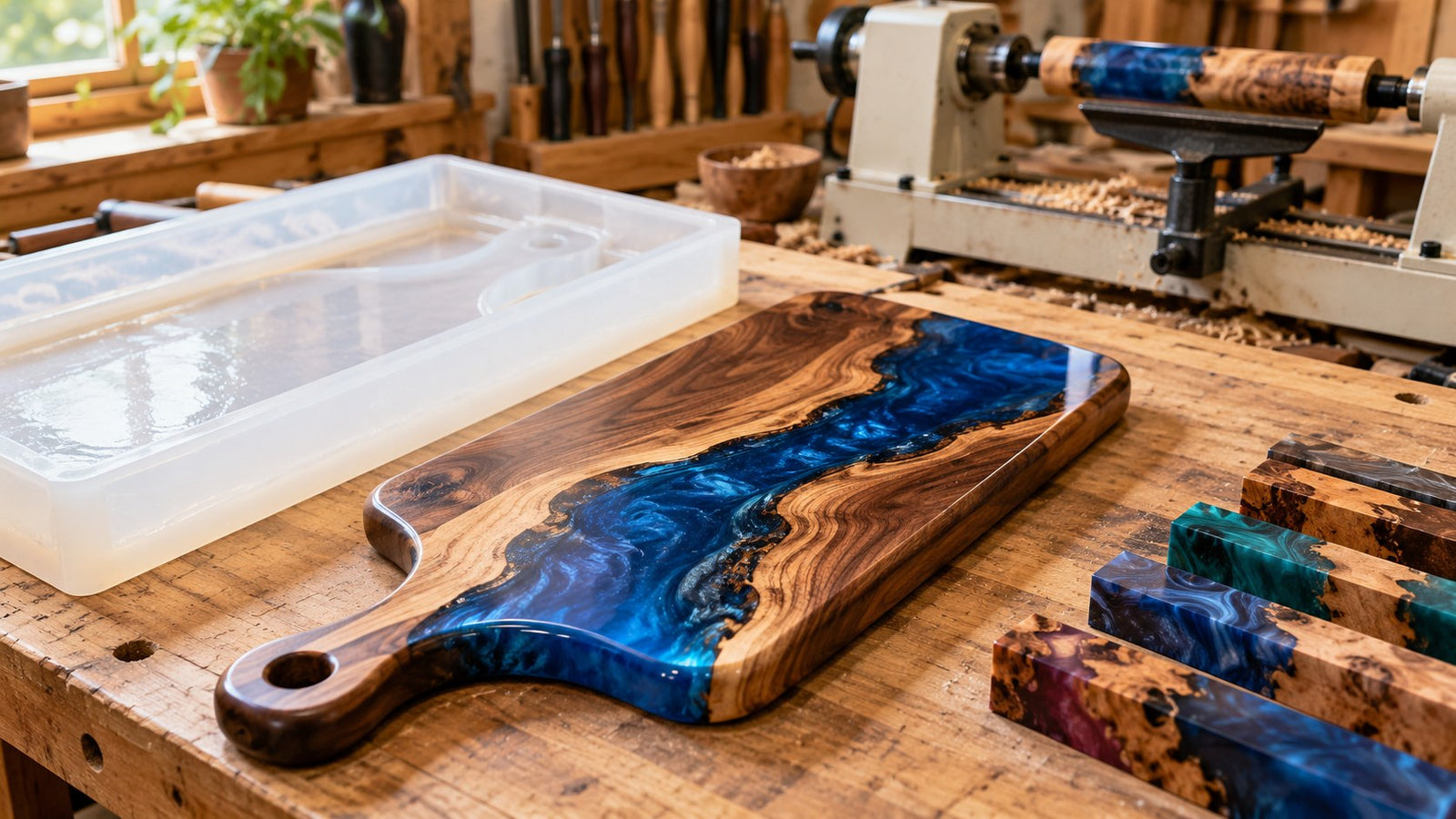
A charcuterie board mold is one of the most useful additions to an epoxy woodworking shop. Whether you're combining wood with colored resin or casting an entire serving board, silicone makes it easier to create consistent shapes without rebuilding a mold each time.
Our charcuterie board silicone molds come in a variety of shapes and sizes, including rounds, rectangles, and novelty designs. Most are 1.25 inches deep, giving woodworkers plenty of options for serving board projects.
If you're getting started, consider our 18" x 9" x 1" Large Rectangle Mold. It's a straightforward rectangular casting mold that woodworkers can use for serving boards. The simple shape is especially convenient when experimenting with different wood arrangements and resin colors.
One tip: take your time arranging the wood before mixing your epoxy. Decide where the resin will flow, how much wood you want visible, and whether the finished design needs any additional machining. Planning ahead makes the actual pour much easier.
River-Style Tables and Large Castings
River-style woodworking combines natural wood with epoxy to create a contrasting section between the pieces. The same approach can be used for smaller decorative slabs, serving boards, and larger castings.
When shopping for river table molds, pay attention to the dimensions of your project, the depth of your pour, and how you'll support the mold during curing. Browse our silicone molds for woodworkers to explore the available shapes.
Deep epoxy pours require more planning than shallow ones. Always choose a resin rated for your intended casting depth. Pouring thicker than the manufacturer's recommendation can cause excessive heat buildup, discoloration, or other curing problems.
If your resin requires multiple pours, follow its instructions for layer thickness and timing. Some products allow additional layers during a specific curing window, while others require different surface preparation.
Keep the mold level and properly supported. Resin is heavy, and a flat, stable surface helps maintain the intended shape while everything cures.
Wood can also float when surrounded by liquid epoxy. Secure or weigh down your wood before pouring so it stays exactly where you want it. Use a method that won't interfere with the finished surface.
Turning Blanks and Small Shop Projects
Not every epoxy project needs to be a large slab. Some of the most satisfying woodworking projects start with small castings that can be machined or turned into finished pieces.
Pen Blanks
Our Pen Blank Silicone Mold casts five blanks at once, each measuring 6" x 1" x 1". It's pressure pot safe and works especially well for hybrid wood-and-resin pen blanks.
Instead of making one blank at a time, you can prepare multiple color combinations or wood arrangements in the same casting session. After curing, the blanks are ready for the next steps in your normal woodworking process.
Cylinder Blanks and Knife Scales
Cylinder silicone molds are another option for woodturners. They're useful for casting blanks for projects such as bottle stoppers, handles, and inlays that will be shaped on a lathe.
For knife scales, a small rectangular epoxy slab can provide material that you cut and machine to your intended dimensions. Make sure the resin and wood combination is appropriate for the finished application.
You can explore additional options in our woodworking collection.
Guitar-Shaped Serving Boards
Want something different from a standard rectangle? Our Guitar Silicone Mold creates a music-inspired serving board shape measuring 20" tall, 8.5" wide, and 1.25" deep. There's also a 24-inch XL size and an optional guitar pick coaster mold on the same listing.
It's a fun choice for woodworkers who enjoy making gifts for musicians or experimenting with less traditional board shapes.
Tips for Clean Epoxy Pours in Silicone
Good results start before the resin ever touches the mold. Here are a few habits worth developing.
- Start with dry wood. Moisture can interfere with the appearance and quality of a wood-and-resin casting. Make sure your material is properly dried before pouring.
- Seal porous wood first. A thin seal coat can help reduce air escaping from wood into the surrounding epoxy, which can otherwise create bubbles.
- Check your setup for leaks. Even though a one-piece silicone mold has no assembled wall seams, inspect it for damage and make sure your entire setup is secure before pouring.
- Keep the workspace comfortable. Around 70–75°F is a useful starting point for many epoxy projects, but always follow your resin manufacturer's temperature recommendations.
- Consider an optional mold release. Our glossy silicone molds don't require a release agent for demolding. However, a silicone-safe release spray can help extend mold life. Some listings, including our pen blank mold, recommend Ease Release 200.
- Allow the full cure time. Don't rush demolding or machining. Follow the resin manufacturer's curing instructions, especially for thick castings.
Frequently Asked Questions About Epoxy Woodworking Molds
Will epoxy stick to silicone molds?
Epoxy generally releases well from properly cured, compatible silicone molds. Our molds are designed for clean release without damage to the casting. Their glossy interiors also help produce a smooth, shiny finish that usually doesn't need additional polishing.
How many times can I reuse a silicone mold?
There's no single number that applies to every mold. Lifespan depends on the resin, curing temperatures, handling, and how the mold is maintained. Avoid excessive heat, sharp tools, and aggressive demolding. An optional silicone-safe release spray may help extend its usable life.
Can I use these molds for deep river table pours?
Yes, you can use appropriately sized silicone molds for deep epoxy woodworking projects, provided your resin is rated for the intended depth. Support the mold on a flat surface, secure any wood that might float, and follow the resin manufacturer's limits for thickness and curing temperature. Check the specific mold dimensions before choosing one.
Do I need a release agent?
No. A mold release agent is not required to demold pieces from our silicone molds. However, a silicone-safe release spray is optional and can help extend the life of your mold. Always check the release product's instructions and compatibility with your resin.
Find the Right Silicone Mold for Your Next Woodworking Project
From serving boards to pen blanks and turning projects, silicone molds can save preparation time and help you achieve clean, consistent results. The biggest difference is being able to focus more on your woodworking and less on building disposable forms.
At Zapp3D Design, we make every mold by hand here in the USA, with glossy interiors, clean-release surfaces, and fast shipping.
Take a look through our woodworking molds and find a shape that fits your next project.
Leave a comment
Comments will be approved before showing up.
Sign up for new products alerts and discounts!
Sign up below!